Our Backstory
From Confinement to Creativity
At 516 Linn Street in Queensgate, walls that once held inmates now hold opportunity.
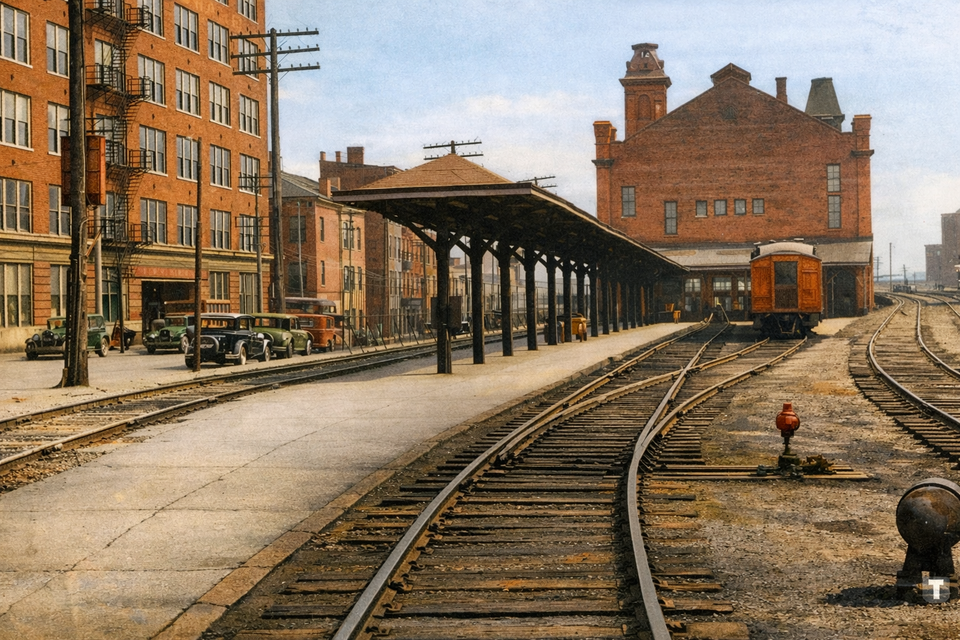
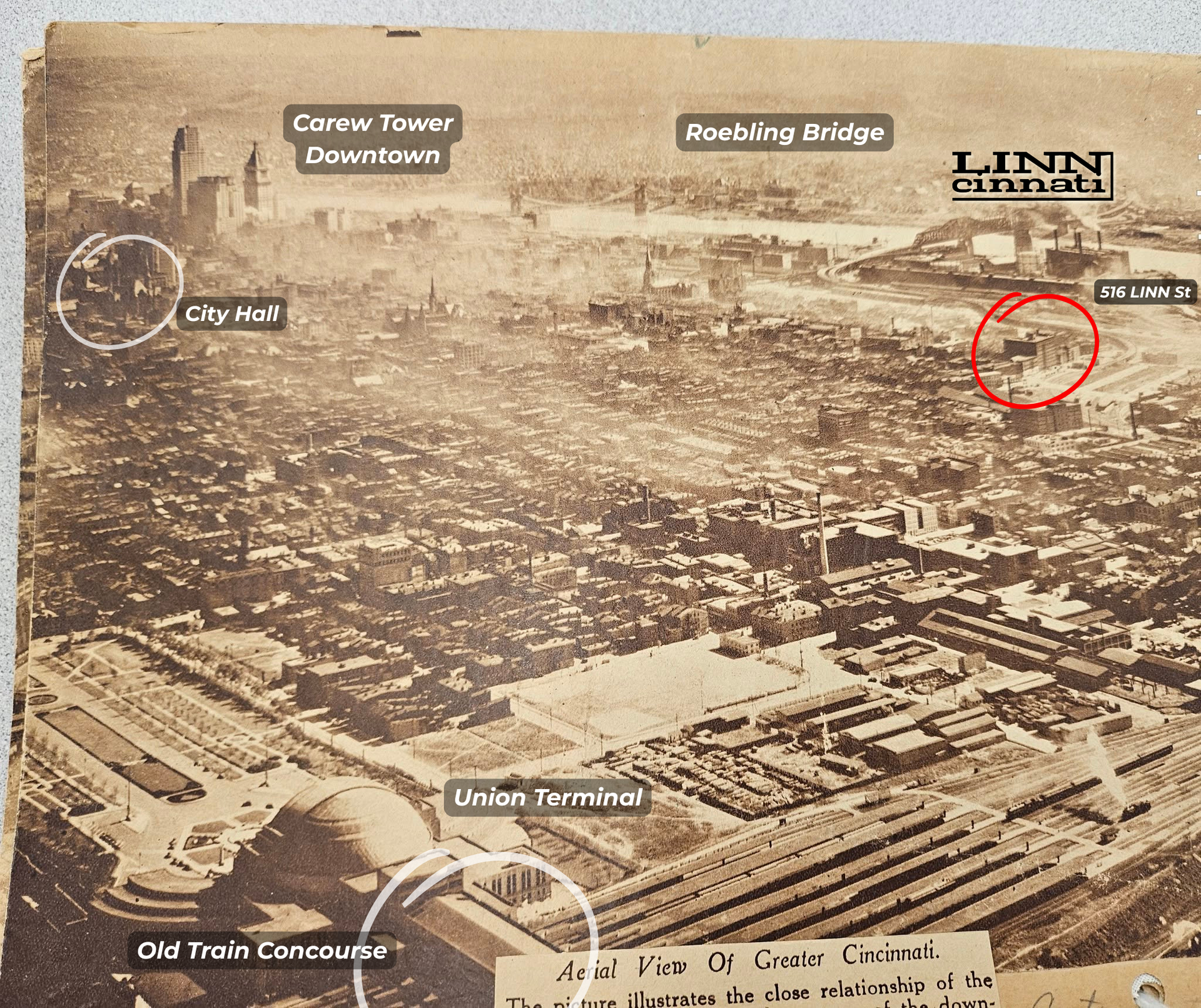
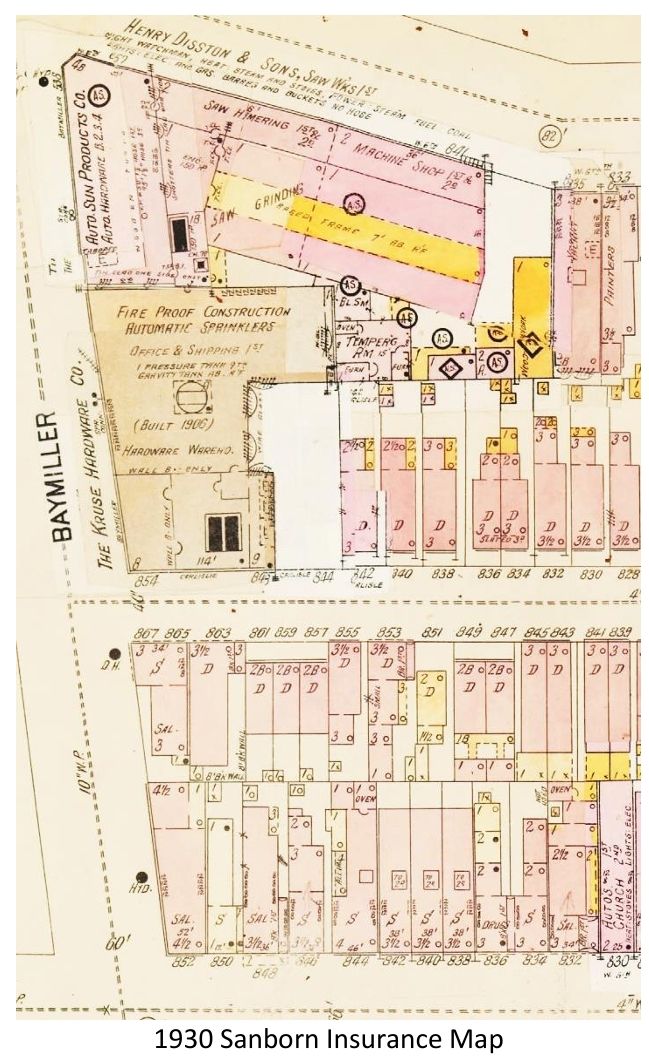
The site originated in Hathaway’s Subdivision (1855), later serving Cincinnati’s industrial base as Western Steam Stone Works and Henry Disston & Sons Saw Works.
By 1906 much of the current 8-story tower was built, leased to several operators as warehouse space.
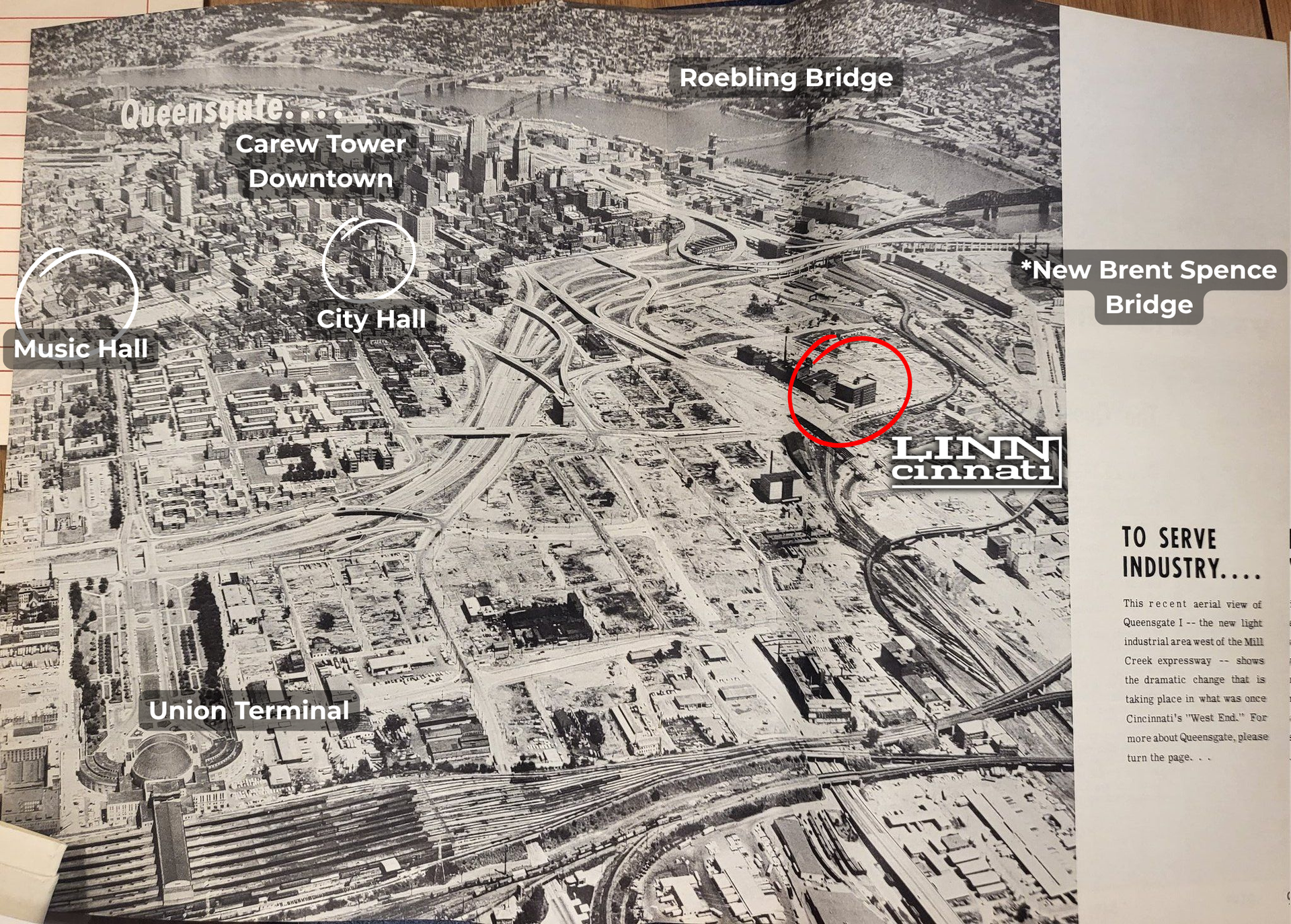
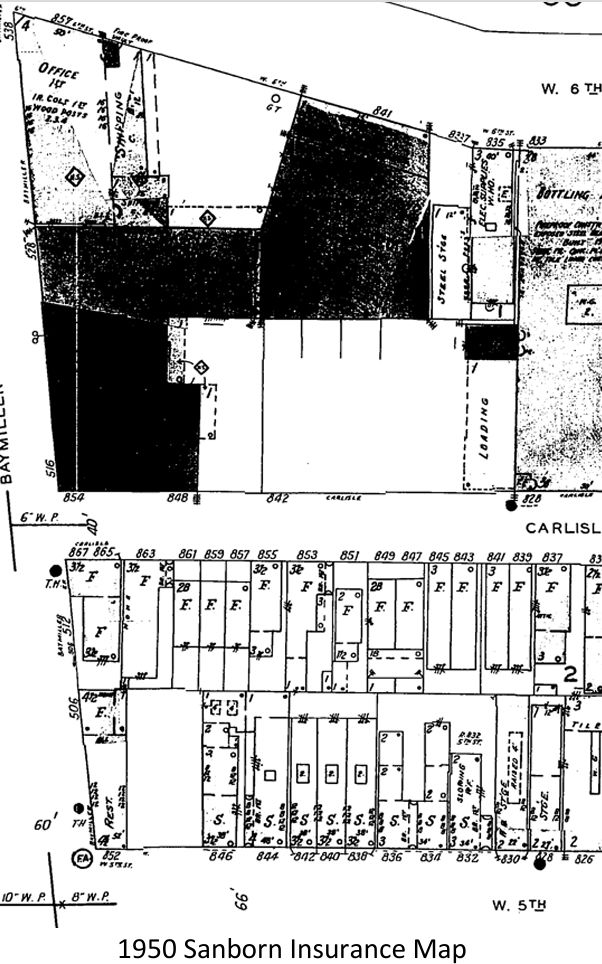
By 1939, much of the site became home to Kruse Hardware Company, a durable warehouse operation that anchored the area for decades, while Auto Sun Products Company sat in what today is the north lot.
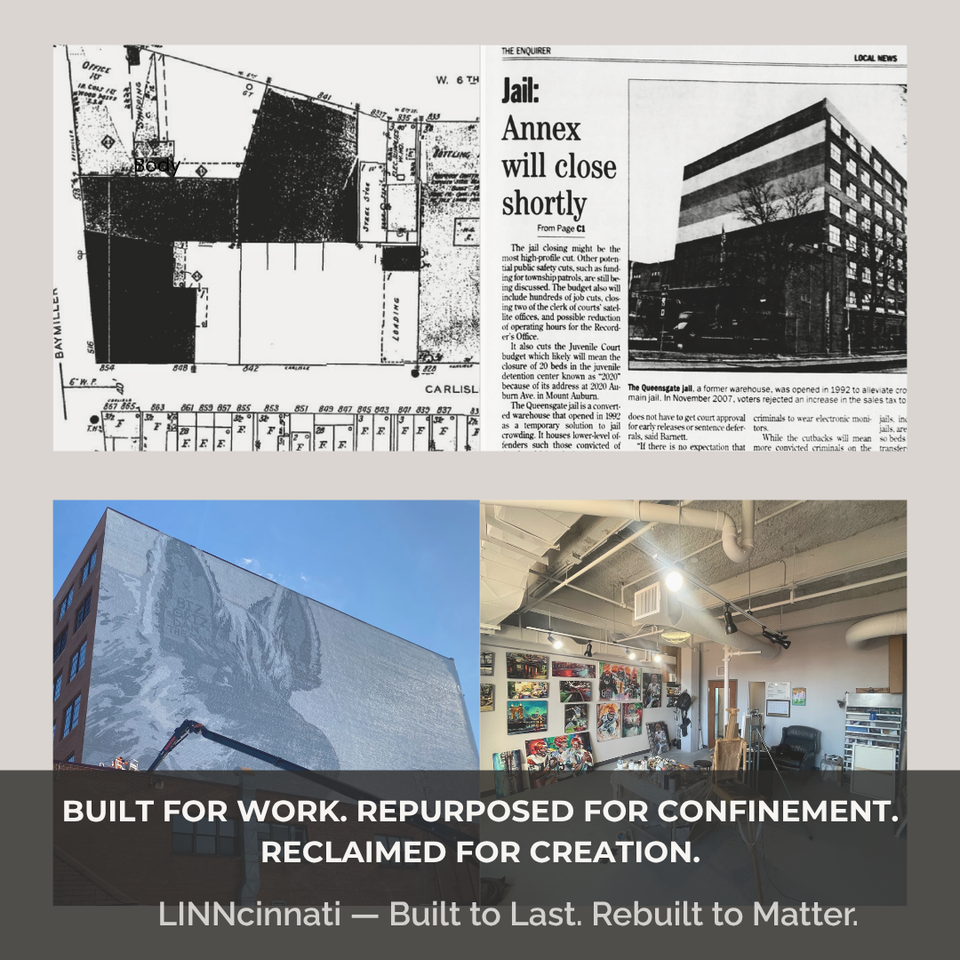
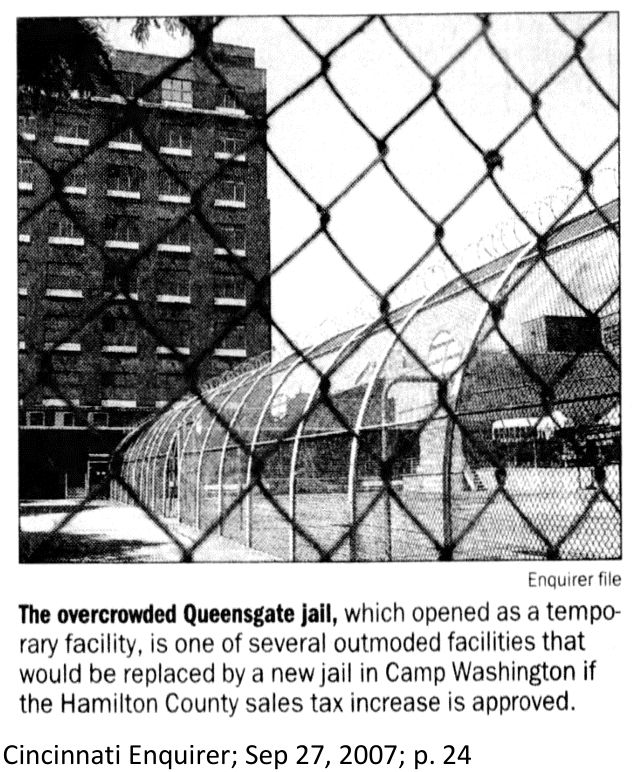
In 1992, the property was converted into a private correctional facility under U.S. Corrections Corporation and later Corrections Corporation of America, operating for 16 years.
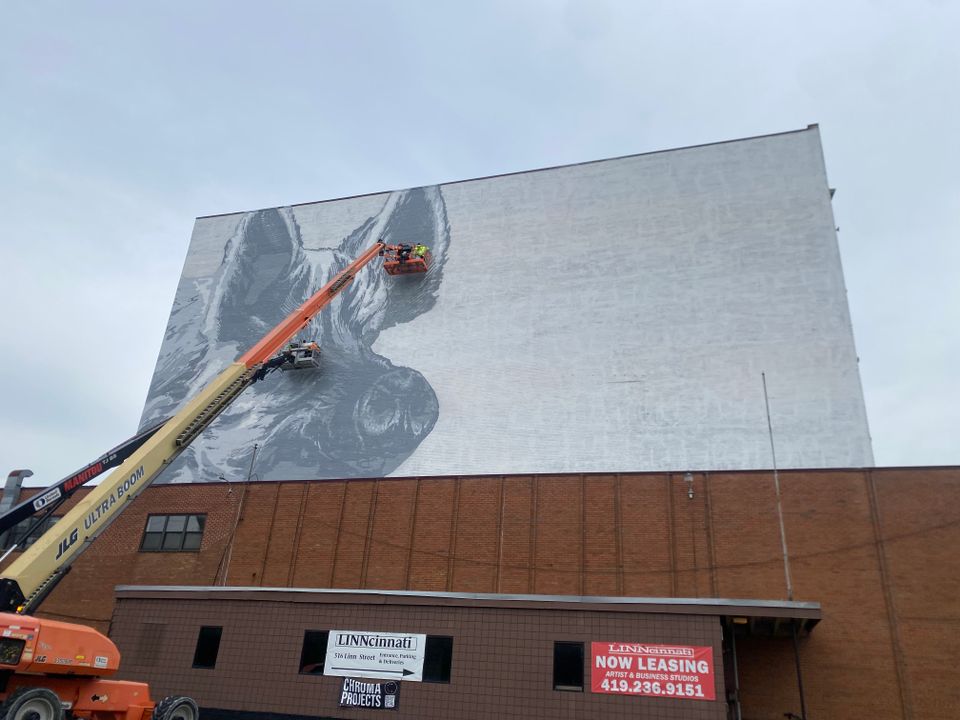
The jail closed in 2008 — leaving 516 Linn empty but intact — until Arrand Development reclaimed it in 2022, transforming confinement into creativity.
Today, LINNcinnati houses over 100 affordable studios for artists, makers, and entrepreneurs — turning a once-restrictive space into a community defined by access and expression.
The site originated in Hathaway’s Subdivision (1855), later serving Cincinnati’s industrial base as Western Steam Stone Works and Henry Disston & Sons Saw Works.
By 1906 much of the current 8-story tower was built, leased to several operators as warehouse space.
By 1939, much of the site became home to Kruse Hardware Company, a durable warehouse operation that anchored the area for decades, while Auto Sun Products Company sat in what today is the north lot.
In 1992, the property was converted into a private correctional facility under U.S. Corrections Corporation and later Corrections Corporation of America, operating for 16 years.
The jail closed in 2008 — leaving 516 Linn empty but intact — until Arrand Development reclaimed it in 2022, transforming confinement into creativity.
Today, LINNcinnati houses over 100 affordable studios for artists, makers, and entrepreneurs — turning a once-restrictive space into a community defined by access and expression.